Quick summary
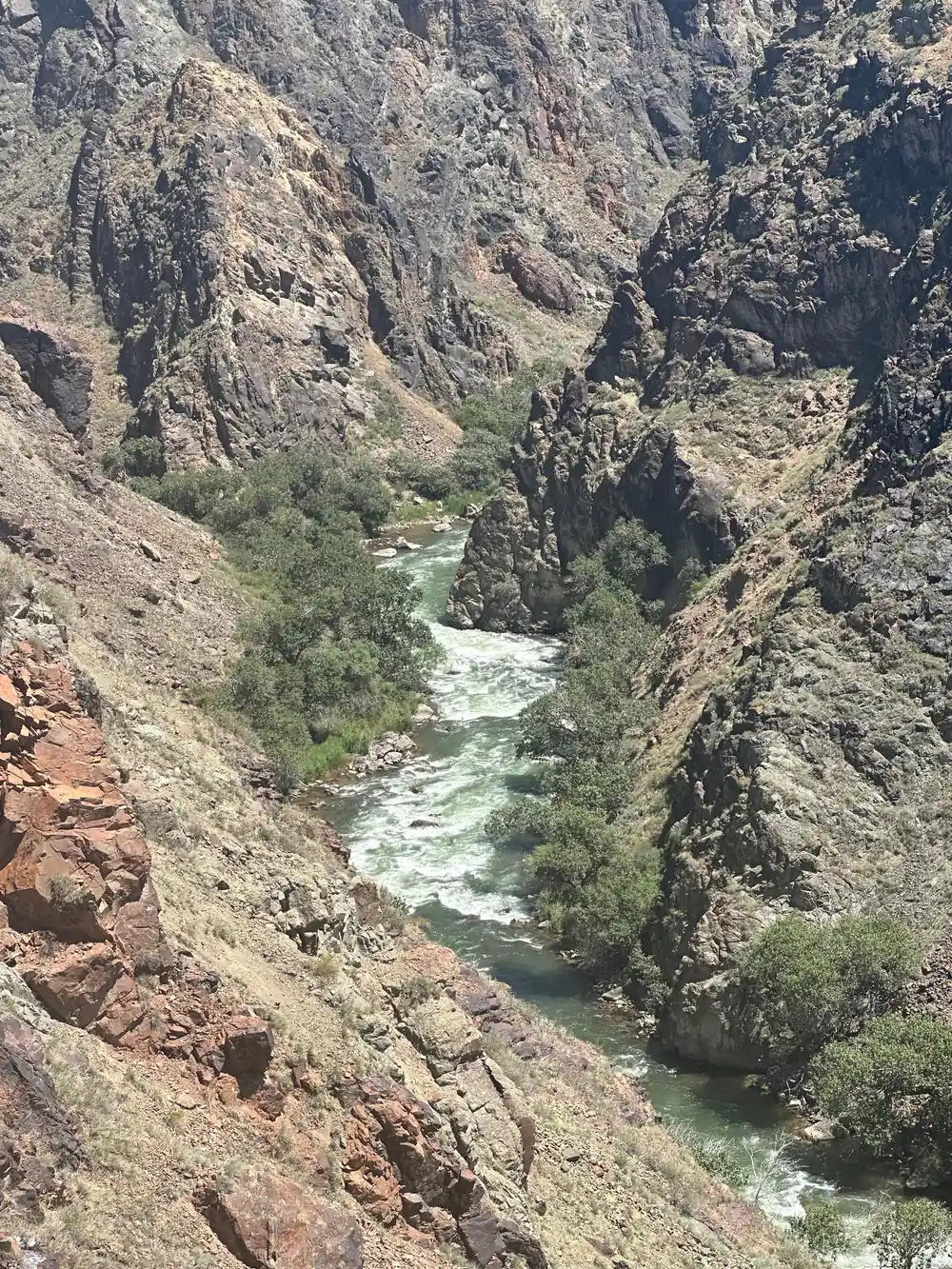
- The tour begins at Black Canyon, where dark basalt cliffs frame the Charyn River before it carves the red rock formations downstream.
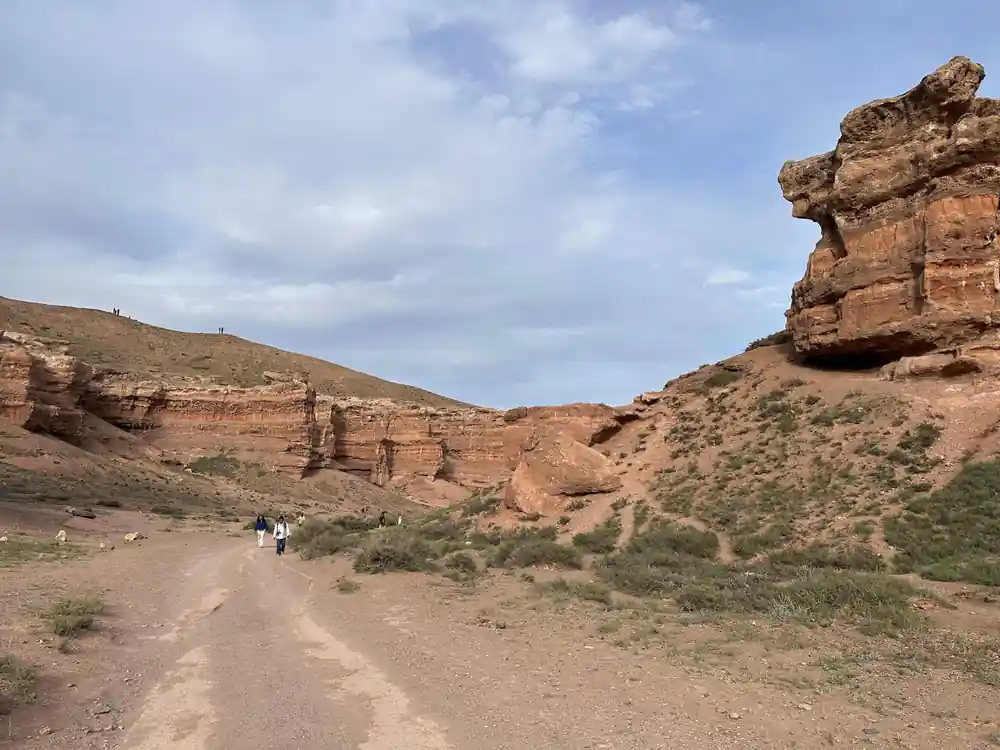
- Black Canyon's somber stone contrasts sharply with the Valley of Castles' rust-colored pinnacles, yet both were shaped by the same river over millennia.
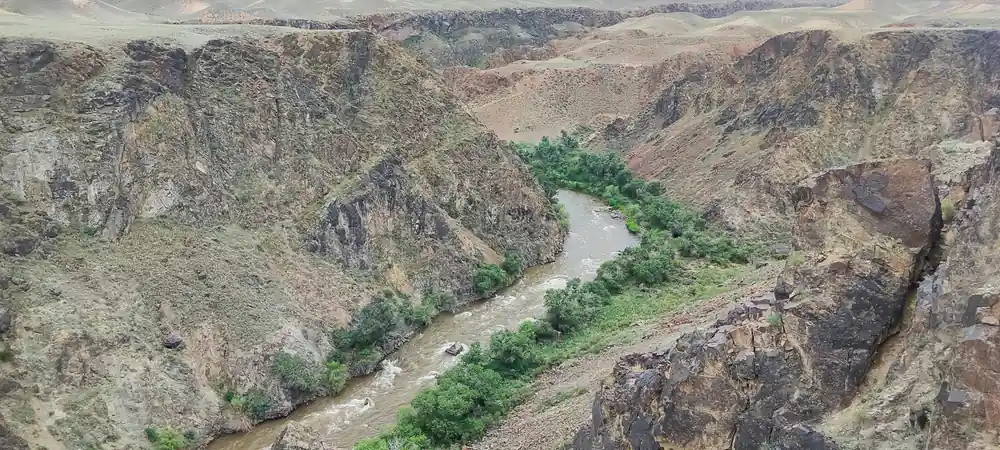
- The Charyn River runs green against red canyon walls, its erosive power the architect of both gorges across the full 154-kilometre stretch.
- The entire Charyn gorge system earned national park status to protect its geological significance and the rare Sogdian ash groves found in its depths.
- At up to 300 metres deep and spanning vast distances, Charyn ranks among Asia's most dramatic canyon systems, carved entirely by water and time.
Black Canyon: The Dark Gateway to Charyn
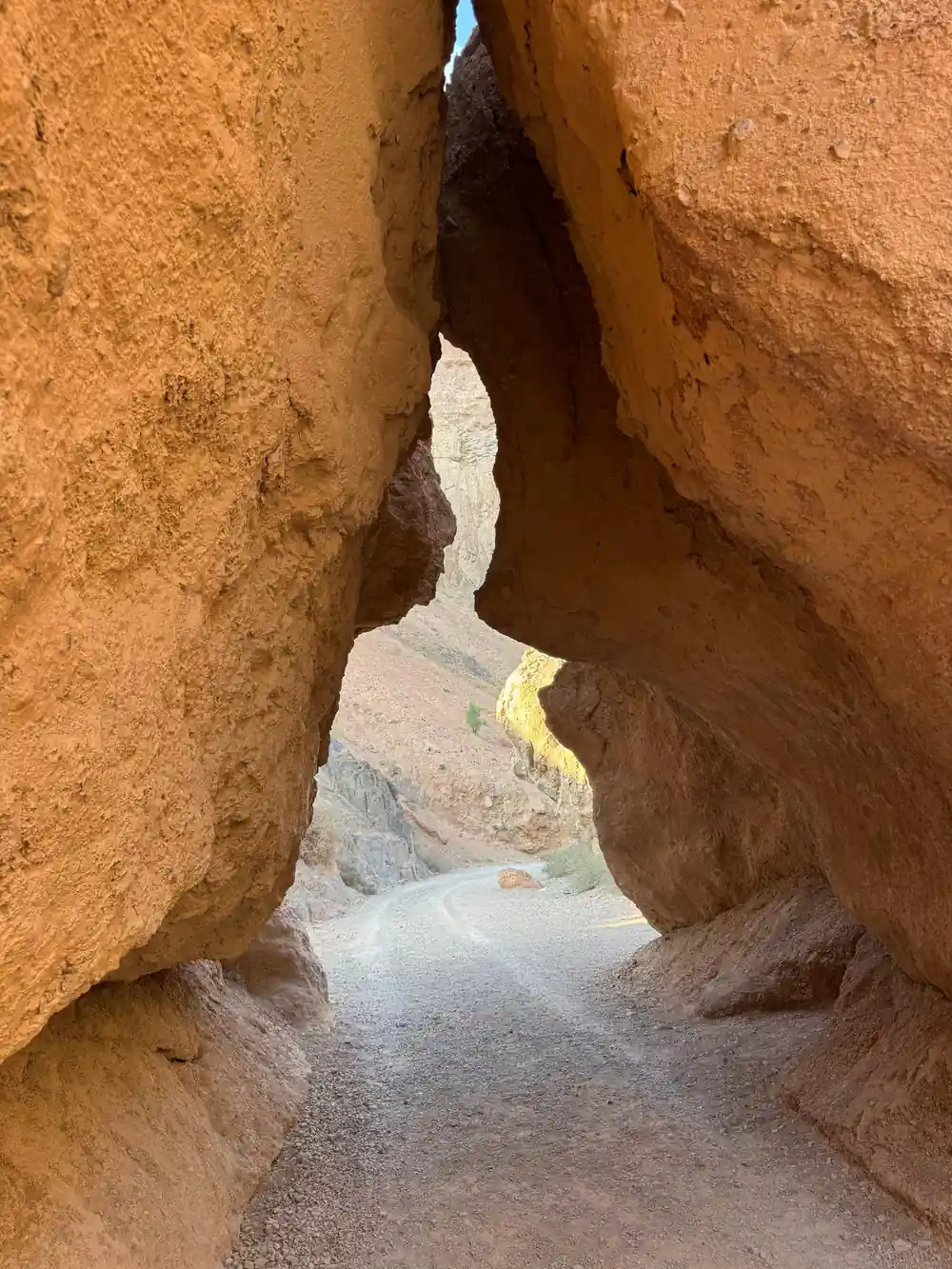
Your journey through Charyn begins not at the famous Valley of Castles, but at Black Canyon, where the Charyn River cuts through ancient basalt cliffs. This overlooked first stop reveals a landscape entirely different from what waits downstream. Where the lower canyon glows red and orange, Black Canyon is defined by dark volcanic rock that rises steeply from the river's edge. The basalt here formed millions of years ago from lava flows, creating a compact, dense stone that the river has carved into dramatic gorges and narrow passages. Few visitors expect this transition, but it is essential to understanding how Charyn's geology shifts as you travel downstream.
The Black Canyon section stretches for several kilometres and represents the river's most confined passage. Sheer walls tower above the water, and the canyon floor remains cool and shadowed throughout the day. This is where the Charyn River, having descended from the high Tian Shan mountains to the south, begins its aggressive work against the landscape. The basalt has resisted erosion more stubbornly than the sandstone layers that appear further downstream, which explains why this section remains narrow and dramatic rather than opening into a wide valley.
The Charyn River's Journey from Mountain to Steppe
The Charyn River originates high in the Tian Shan mountain range, where snow and glacier melt feed its upper tributaries. From there, it flows north and northwest across Kazakhstan's varied terrain for approximately 400 kilometres before joining the Ili River on the steppe. This entire journey is a lesson in how water shapes land. The river begins as a mountain torrent, cold and fast, carrying sediment from erosion high above. As it descends and slows, it deposits some of that sediment but continues to cut downward into older rock layers, carving the canyons that you will see on this tour.
The section you visit on this day trip captures the river at a critical point: where it has left the high mountains but still carries enough force to cut through resistant stone. By the time the Charyn reaches its confluence with the Ili River on the way to Lake Balkhash, it has slowed considerably and spread across broader plains. The contrast between Black Canyon and the Valley of Castles reflects this journey. Black Canyon is where the river still possesses mountain energy; the Valley of Castles downstream shows what happens when that energy meets softer sandstone and has more room to work horizontally as well as vertically.
Why the Water Runs Green Against Red Rock
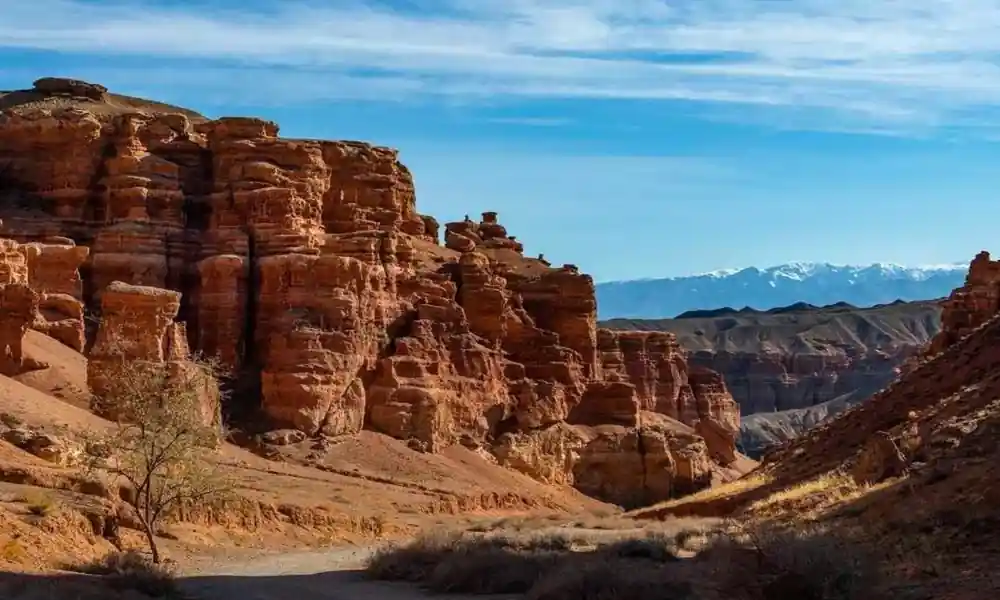
The distinctive green colour of the Charyn River appears almost unnatural against the red and orange sandstone cliffs that frame it. This colour comes from suspended glacial minerals and fine sediment particles held in the water. High in the Tian Shan, glaciers still cover parts of the landscape, and as they melt, they produce a fine powder called glacial flour. These microscopic particles remain suspended in the river water, scattering light in a way that creates the vivid green hue. The effect intensifies on clear days when sunlight penetrates the water column.
This same process occurs in glacial lakes worldwide, but at Charyn the effect is especially striking because of the visual contrast with the red sandstone walls. The red rock itself comes from iron oxide minerals in ancient sedimentary layers, creating a natural colour palette that changes with the angle of sunlight and the season. Early morning and late afternoon light intensifies both colours, making the green water seem to glow against the warming red cliffs. Understanding this colour phenomenon helps explain why the canyon draws photographers and naturalists throughout the year.
Basalt Below, Sandstone Above: Reading the Charyn's Geology
The clearest difference between Black Canyon and the Valley of Castles lies in the stone itself. Black Canyon cuts through ancient basalt, a hard volcanic rock that breaks into vertical columns and resists erosion slowly. The Valley of Castles, reached later in your tour, exposes layers of red sandstone that erode more readily, creating the spectacular spires and towers that give it its name. These two rock types tell different stories. The basalt formed during an ancient episode of volcanic activity, when lava flows covered much of central Asia. The sandstone formed later, in ancient seas and river deltas, from compressed sand and mineral deposits.
As the Charyn River flows from north to south through these different stone layers, it encounters varying resistance. Where basalt dominates, the canyon remains narrow and deep, with steep walls and a confined riverbed. Where sandstone takes over, the same river erosion produces wider valleys with elaborate cliff formations. A guide who knows this geology can show you the boundary between these systems, visible in the rock faces themselves. The different hardness of these materials explains not just what the canyon looks like today, but also predicts how it will continue to change over geological timescales.
150 km
The Charyn gorge stretches over 150 kilometers through layers of red and black stone carved by the river.
The Relict Sogdian Ash Grove and Ancient Human History
Downstream in the Charyn area grows a rare relic forest of Sogdian ash trees, species that has survived here since ancient times. These trees represent a connection to Central Asia's pre-Islamic past, when Sogdian merchants controlled the trade routes that crossed these lands. The ash grove occupies a specific microclimate in the canyon, where moisture, temperature, and shelter combine to support a plant community that has largely disappeared elsewhere. The trees are small and adapted to the harsh steppe environment, their deep roots reaching far into the rocky soil to find water.
This grove interests botanists because it represents a remnant ecosystem, a living record of how the region's climate and vegetation have changed over millennia. The Sogdian ash is not native to most of Kazakhstan, yet it persists here in pockets along the canyon where conditions remain suitable. Your guide can point out this forest and explain its significance both as a botanical curiosity and as a marker of human history. The presence of these trees reminds visitors that Charyn is not merely a geological wonder, but a place where human activity and natural systems have intertwined for centuries.
Canyon Dimensions: Depth, Length, and Scale
The Charyn Canyon system extends for more than 150 kilometres in total length, though the most dramatic and visited section spans approximately 80 kilometres. The deepest portions of the canyon reach depths of 300 metres or more, with walls rising nearly vertically from the river in some locations. These measurements vary depending on which section you examine and how you define the canyon's boundaries, but they convey the sheer scale of what the Charyn River has accomplished through millions of years of erosion. Standing at the rim or on the riverbank, you experience this scale viscerally as your eye travels upward along the exposed rock faces.
The width of the canyon floor varies considerably. In Black Canyon, the river channel may occupy most of the available space, leaving little room for vegetation or walking paths on the ground level. In the Valley of Castles and other downstream sections, the canyon widens, and the riverbed becomes smaller in proportion to the overall gorge width. This variation results from differences in rock hardness and the river's ability to erode sideways versus downward. Comparing the narrow confinement of Black Canyon with the more spacious formations elsewhere on your tour illustrates how geology directly determines landscape form.
Protected Status and Conservation
Charyn Canyon became a national park in 2004, initially as a smaller protected area, with expanded protections added in subsequent decades. The decision to protect the canyon reflected recognition of its geological significance, its role as a habitat for rare plant and animal species, and its value as a landscape of scientific and educational importance. The designation came relatively early in Kazakhstan's conservation history, demonstrating that the canyon's exceptional qualities were recognized long ago. Today, the national park status helps regulate visitor access, prevent extraction of minerals or geological specimens, and maintain the canyon in a state that allows ongoing scientific study.
The protection also ensures that the relict Sogdian ash grove and other rare species can continue to survive in their traditional habitat. Without the park designation, the canyon might have faced threats from mining, commercial development, or unmanaged tourism. The canyon's designation reflects a broader understanding that landscapes like Charyn represent irreplaceable geological and biological heritage. As you travel through the canyon on this guided tour, you are moving through a landscape that conservation policy and scientific consensus have deemed worthy of protection for future generations. This status shapes everything about your experience, from the maintained access paths to the professional guides who accompany you.
See both canyons in one day trip
from US$59Reserve now & pay later