Quick summary
- A massive landslide triggered by the 1911 earthquake dammed the valley, creating Kaindy Lake and submerging an entire spruce forest beneath its surface.
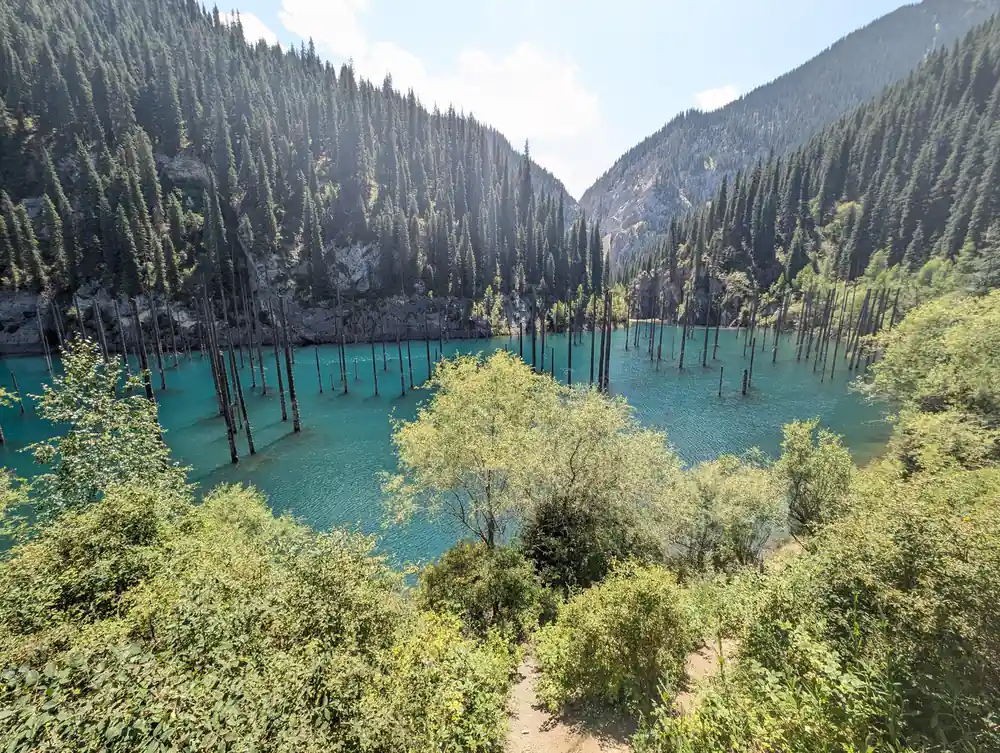
- Dead spruce trunks remain standing upright on the lake floor, preserved by cold water and creating an eerie submerged woodland visible to swimmers and divers.
- The lake's striking turquoise colour comes from glacial sediment, and its icy temperature reflects its high-altitude location and underground spring sources.
- Kaindy Lake sits within Kolsai Lakes National Park, a protected alpine wilderness in the Tian Shan Mountains east of Almaty.
- The contrast of dead trees against turquoise water makes this one of Earth's most visually striking and unusual natural formations.
The 1911 Earthquake That Created a Lake
In January 1911, the Kebin earthquake shook the northern Tian Shan, triggering a catastrophic landslide on the slopes above a forested depression. The collapse sent millions of tons of rock and earth downslope, damming the small river that flowed through the valley. Water began to accumulate behind this natural barrier, gradually filling the basin over weeks and months. By the time the flooding stabilized, an entire spruce forest stood submerged beneath the newly formed lake. The Kebin earthquake's violence had, in a single moment, transformed a wooded landscape into one of Earth's most unusual natural monuments. Today, more than a century later, the evidence of that catastrophe remains visible in the preserved forest that still occupies the lake's depths.
The disaster created what locals call Kaindy Lake, and the valley bears the geological scars of that upheaval still. The landslide dam, though constructed by chance rather than human engineering, has held firm for over 110 years. The lake sits approximately 2,000 meters above sea level in southeastern Kazakhstan, nestled in a remote corner of the Kolsai Lakes National Park. Its formation was neither gradual nor gentle, and the speed of its creation explains why the forest preservation is so remarkable. Few lakes on Earth can claim such a precise moment of origin, documented by seismic records and confirmed by the standing trees that mark the exact waterline from that era.
Why Dead Trees Stand Upright Underwater
The spruce trunks that fill Kaindy Lake have survived more than a century submerged, yet they remain nearly vertical and largely intact. This extraordinary preservation is not accidental but the result of the lake's extreme physical conditions. The water temperature hovers just above freezing year-round, typically between 4 and 6 degrees Celsius. At these temperatures, bacterial decomposition slows dramatically, and the wood's cellular structure resists the rot that would normally consume it within a few decades. The lake is fresh water, and it is the near-freezing cold rather than any salt that keeps the timber sound.
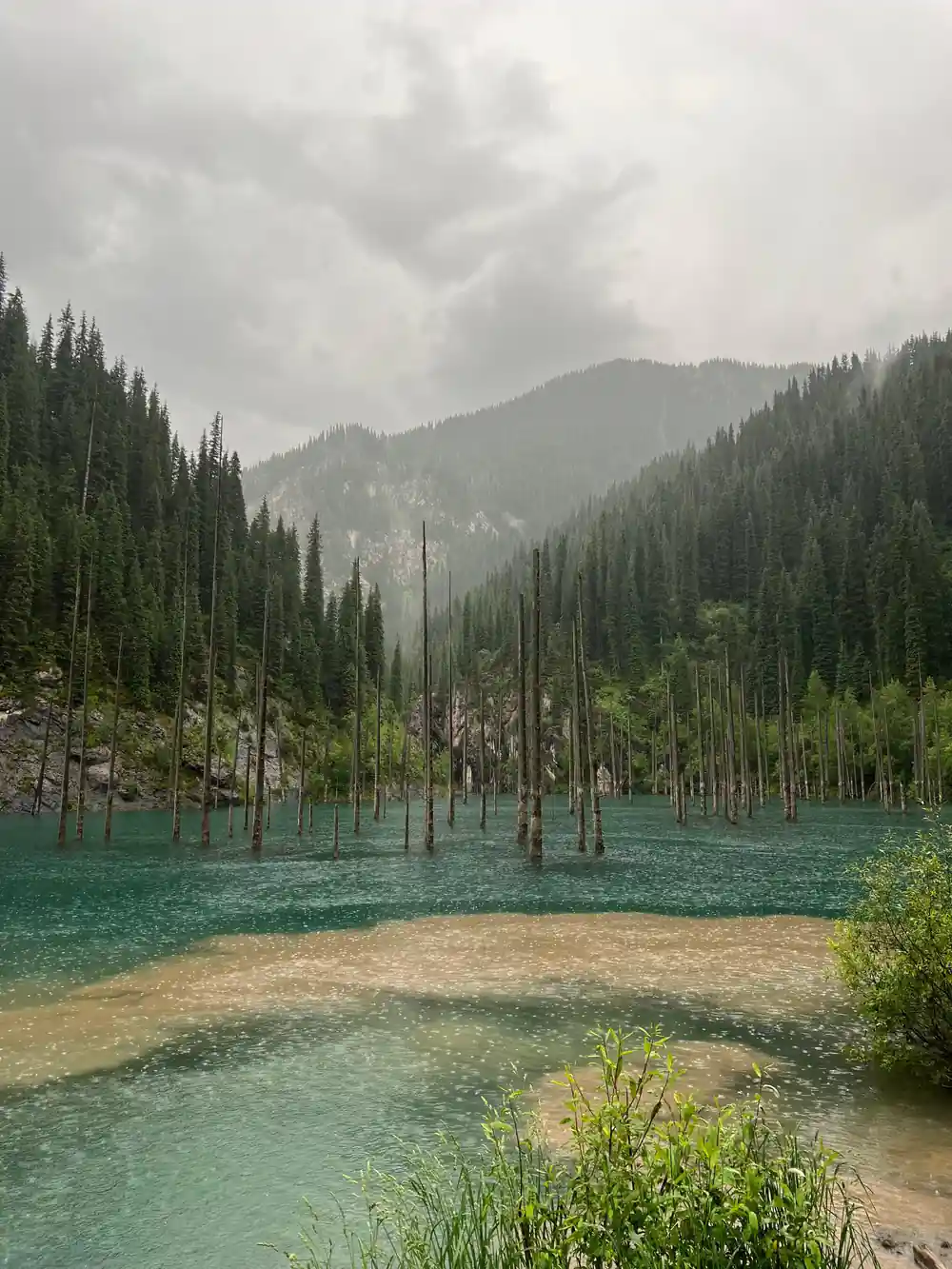
Buoyancy also plays a critical role in the trees' posture. As the wood slowly loses density over the years, it experiences slight upward pressure from the water column, yet the densest portions remain anchored near the lake floor. The result is an almost surreal forest suspended in time, with thousands of pale, ghostly trunks rising from the bottom like the masts of a sunken fleet. The cold, the minerals, the depth, and the absence of wood-eating organisms have conspired to create conditions that allow the trees to persist largely unchanged since 1911. It is a demonstration of how physics and chemistry, working together in extreme environments, can halt the usual progression of decay and loss.
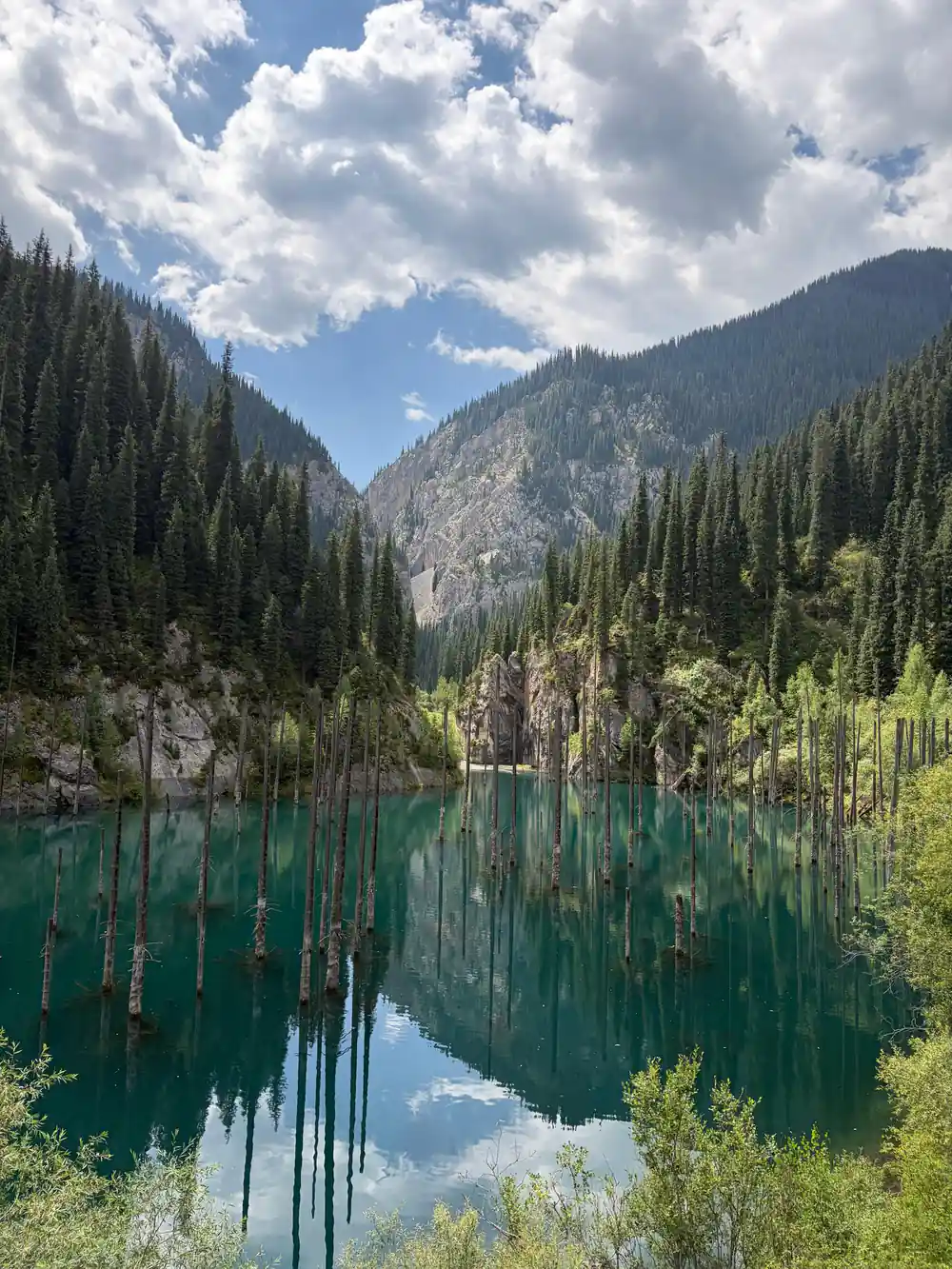
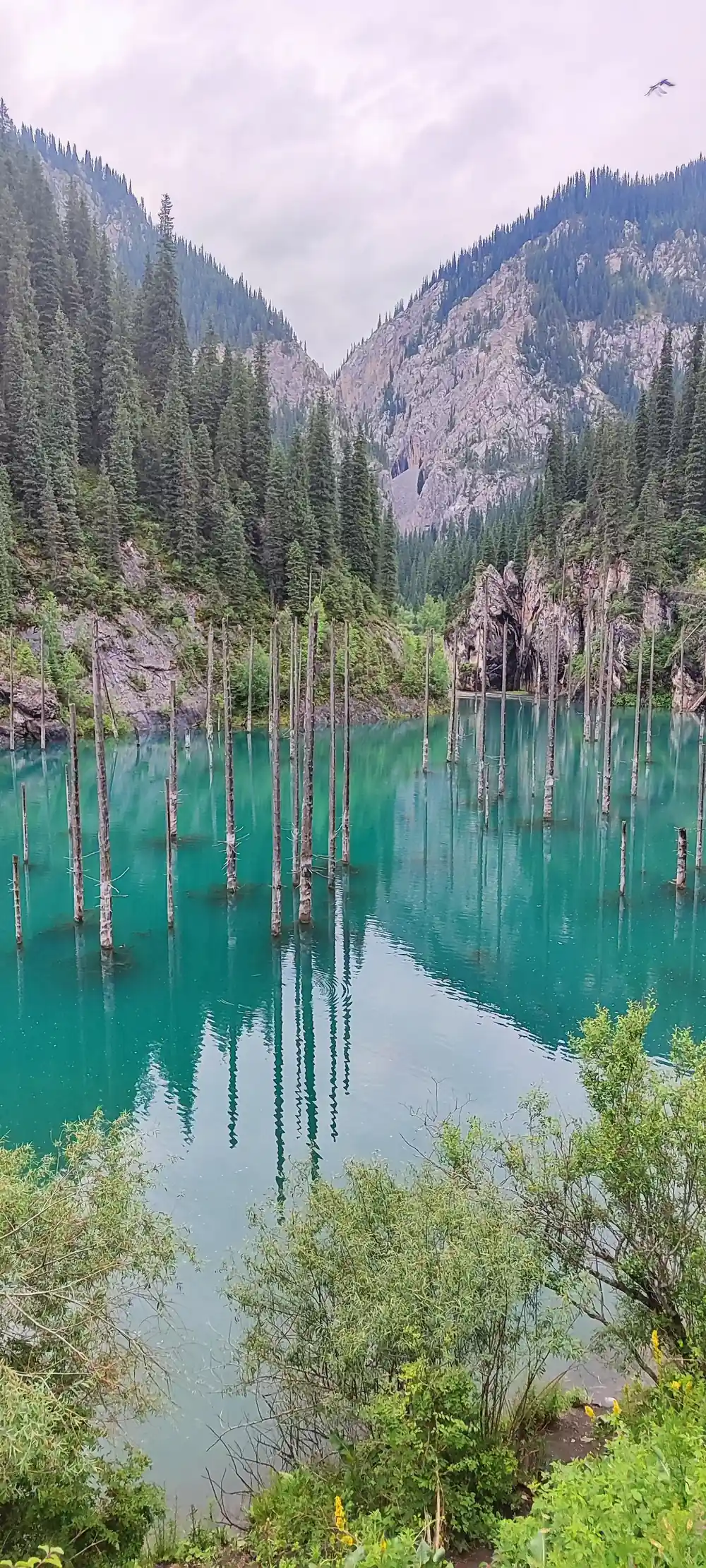
Submerged spruce spears pierce turquoise depths, still standing after a century underwater
The Turquoise Water and Its Source
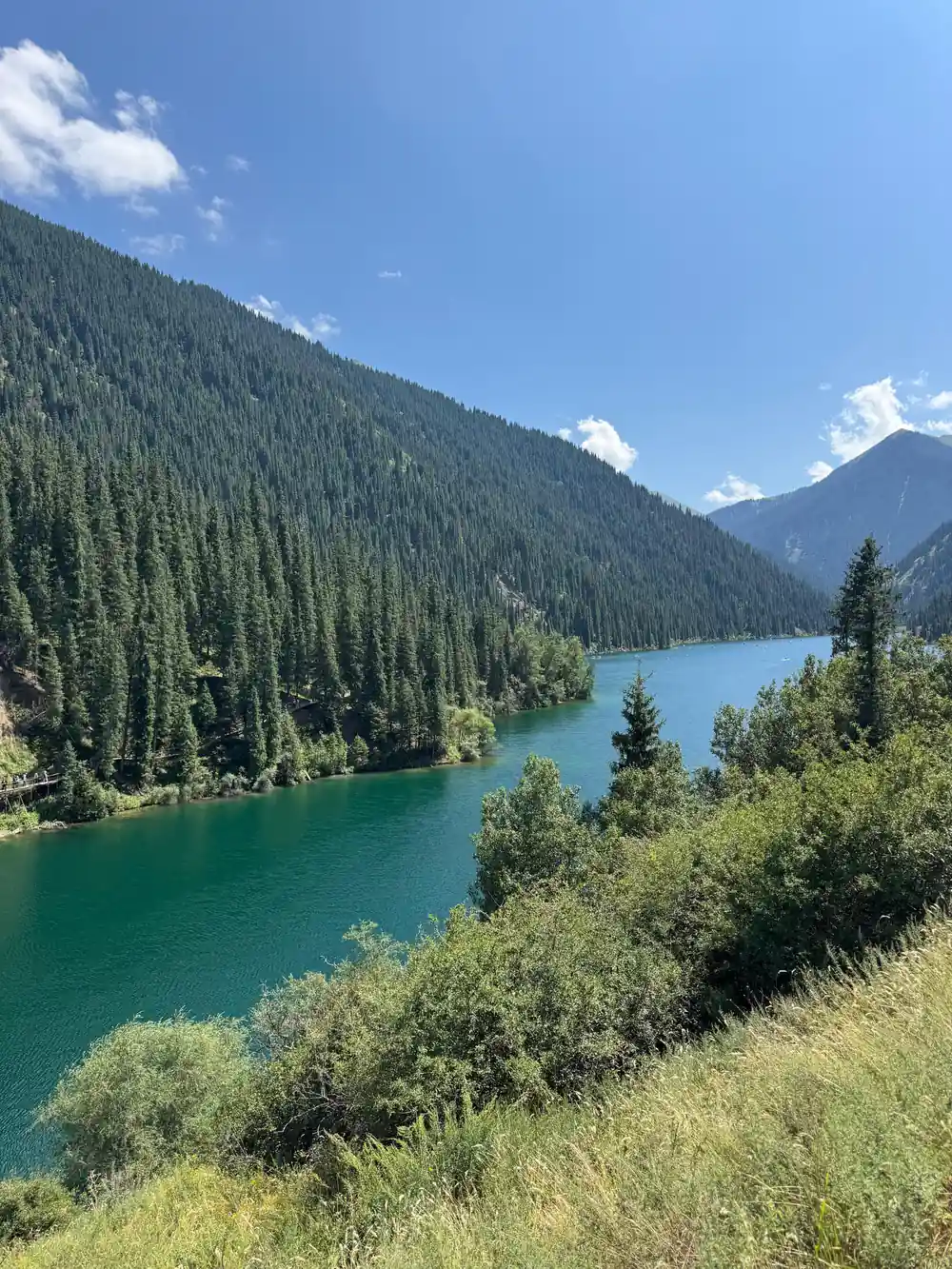
Visitors approaching Kaindy Lake are immediately struck by the water's vivid turquoise hue, a color so intense it seems almost unnatural against the surrounding mountains. This striking appearance comes from suspended mineral particles, primarily glacial silt and limestone sediment, that reflect and scatter light in the blue and green wavelengths. The minerals originate from the ongoing erosion of the surrounding limestone and dolomite formations, which feed into the lake through underground springs and surface runoff. The suspended mineral content explains the colour, while the cold explains the preservative effect that protects the submerged forest.
The exact shade of the water shifts with the season, the time of day, and the angle of the sun, creating a dynamic palette that changes throughout the year. On clear mornings, the lake glows an almost ethereal blue-green that photographers struggle to capture accurately. The minerals suspended in the water scatter sunlight in a process called Mie scattering, the same phenomenon that makes glacial lakes and certain high-altitude pools famous for their otherworldly colors. This mineral-rich composition is not merely aesthetic; it is fundamental to the lake's chemistry and to the preservation of the forest that lies beneath its surface.
Kaindy Lake Depth and Submerged Tree Heights
Kaindy Lake reaches a maximum depth of approximately 30 meters at its deepest point, though much of the lake floor lies at depths between 20 and 35 meters. This considerable depth allowed the forest to be completely submerged and protected from surface disturbances and the oxygen-rich environment near the waterline. The spruce trees that were drowned by the 1911 landslide range in height from 15 to 30 meters, with some of the tallest specimens rising to nearly three-quarters of the lake's maximum depth. Their pale trunks, stripped of bark and bleached by time, create vertical lines that guide the eye downward into the gloom. The forest occupies roughly 80 percent of the lake's surface area, making the submerged woodland far more extensive than any individual visitor can explore.
These measurements help explain the lake's remarkable appearance both from above and below. From the shore, visitors see only the uppermost portions of the tallest trees breaking or nearly breaking the surface, with countless others visible through the transparent turquoise water. The distribution of trees by depth and size creates a complex three-dimensional maze that both intrigues and challenges those brave enough to descend into it. The trees' heights are not uniform; they vary depending on how much of the original tree was preserved and whether the upper portions have been degraded or broken away over the decades. Understanding Kaindy lake depth is essential to appreciating both the scale of the disaster that created it and the preservation miracle that sustains it.
1911
An earthquake in 1911 triggered a landslide that dammed the valley, creating this haunting underwater forest in a single catastrophic moment.
Exploring the Underwater Forest by Scuba Diving
Kaindy Lake to scuba diving has become a destination for divers seeking an otherworldly experience unavailable at most freshwater lakes. The submerged forest presents a landscape unlike any coral reef or kelp forest, with the pale tree trunks creating an eerie, haunting atmosphere. Divers descend among the trees, navigating carefully to avoid disturbing the delicate sediments that have accumulated on the lake floor over more than a century. The cold water demands proper cold-water diving training and equipment, as temperatures remain below 10 degrees Celsius even in summer months. The lack of sunlight at depth, combined with the suspended mineral particles, creates a dim, ethereal environment that requires powerful lights and careful buoyancy control.
Scuba diving in Kaindy lake facts include the understanding that the lake is technically accessible to qualified divers, though it remains a challenging and specialized dive site. The visibility varies considerably depending on recent weather and water conditions, but typically ranges from 5 to 15 meters. Divers who venture into this submerged forest encounter an entirely different world from the one that existed above water before 1911. The trees themselves are fragile; contact with the ancient wood should be avoided to prevent further degradation. The experience offers a direct encounter with geological history and a unique perspective on how time, cold, and chemistry can preserve a moment of catastrophe in remarkable detail.
How the Lake Transforms Through the Seasons
Kaindy Lake undergoes striking transformations as the seasons progress through the year. In winter, a thick layer of ice forms across the surface, completely concealing the submerged forest from view. The ice can reach depths of 60 to 80 centimeters, and when snow accumulates on top, the turquoise water becomes invisible for months at a time. During this frozen period, the lake's appearance is utterly transformed into a snow-covered plateau that reveals nothing of the dramatic landscape beneath. In spring, as temperatures rise and the ice begins to crack and melt, the turquoise water gradually reappears, and the forest becomes visible once more. The mineral content of the water may appear more or less vivid depending on the amount of runoff flowing into the lake from melting snow in the surrounding mountains.
Summer brings warmer air temperatures, though the water itself remains cold, and the turquoise color reaches its most intense and vibrant appearance. The surrounding landscape becomes lush with alpine vegetation, providing a striking contrast to the pale trunks visible beneath the clear water. Autumn gradually returns the valley to more muted tones as vegetation dies back and the angle of the sun shifts lower in the sky. The changing seasons alter not only the appearance of the landscape but also the experience of visiting or diving in the lake. Early autumn, before the first snows arrive, offers perhaps the optimal window for photography and exploration, with clear skies, comfortable temperatures, and the lake at its most visually striking. The seasonal cycle continues the work of preservation begun by the 1911 earthquake, as winter's protective ice and spring's fresh water maintain the conditions that keep the forest frozen in time.
Visiting Kaindy Lake on the Almaty Day Trip
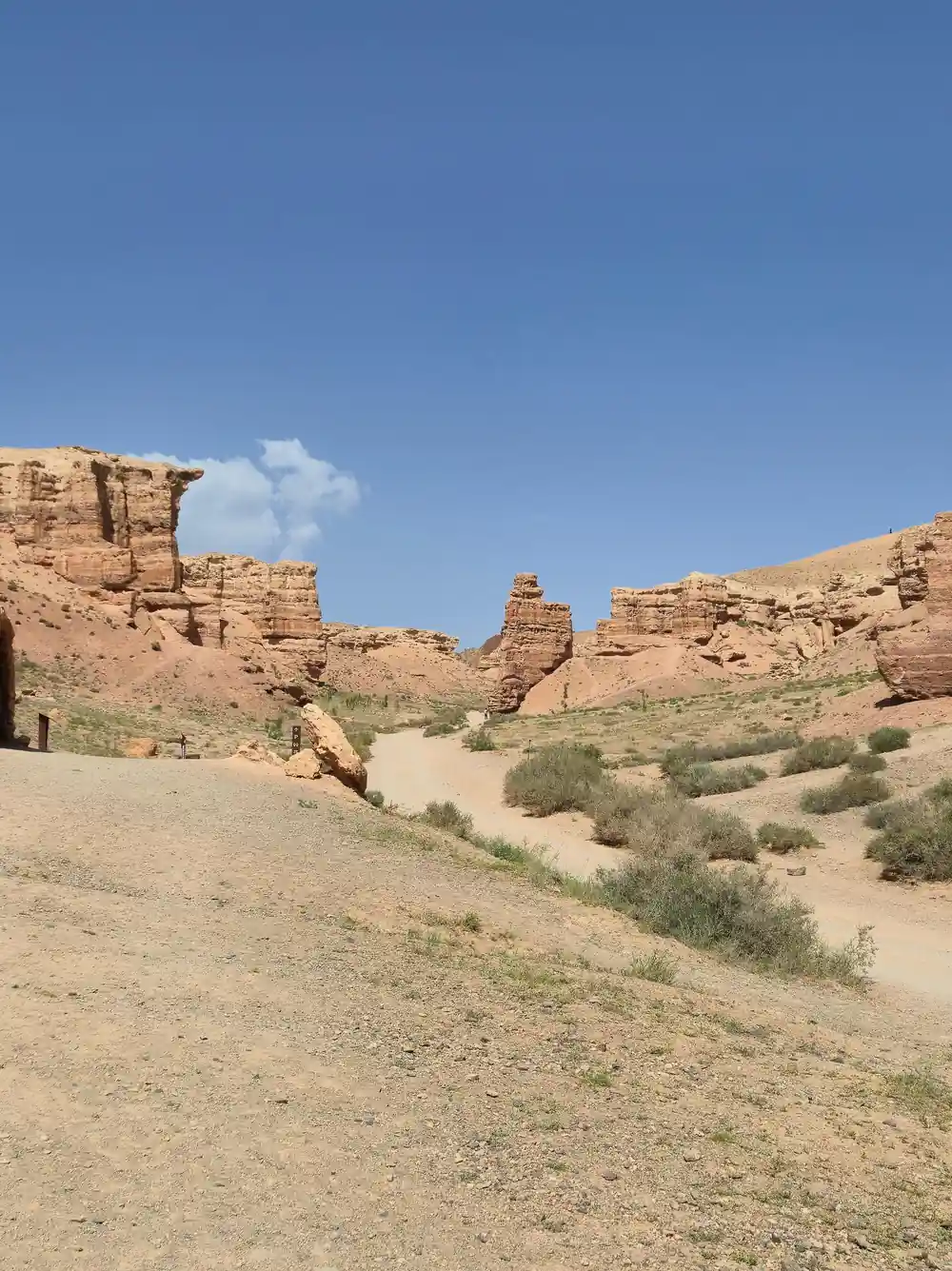
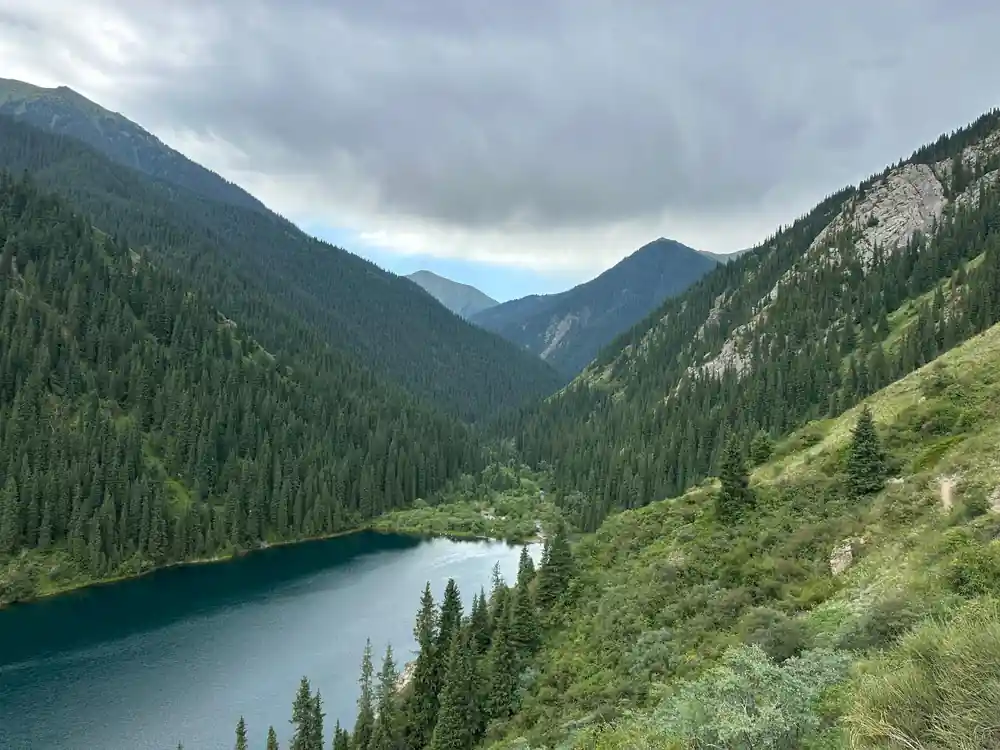
The Charyn Canyon, Kolsai, and Kaindy Lakes day trip from Almaty includes a stop at this remarkable lake as one of three major destinations visited on a full-day excursion. The journey requires a 17-hour commitment, but the itinerary is structured to maximize time at each location while managing travel time efficiently. Transportation is provided in a comfortable Mercedes Benz Sprinter minibus, and a professional guide accompanies the group throughout the day to provide context and answer questions. The transfer to the Kaindy Lake parking area is completed via a Soviet-era UAZ minibus, a smaller vehicle better suited to the rough mountain roads that serve as the final approach to the lake. An entrance ticket to Kaindy Lake is included, allowing visitors to access the shoreline, observe the submerged forest from above, and appreciate the geological and botanical wonder at their own pace.
Visitors to Kaindy lake history learn directly from a guide who can explain the 1911 earthquake, the formation of the landslide dam, and the ongoing preservation of the forest. The tour's structure allows time for photography from the shore, and visitors may bring binoculars or telephoto lenses to examine the trees visible beneath the water's surface in greater detail. The lake sits at high altitude, and visitors should prepare for cool temperatures, thin air, and potentially rapid weather changes. The professional guide can address questions about safety, the best vantage points for photography, and the geological processes that continue to shape the lake and its surroundings. This day trip is designed to showcase not only Kaindy Lake but also the broader natural grandeur of the Almaty region, with Charyn Canyon and the Kolsai Lakes providing complementary experiences of mountains, water, and geological drama.
See the underwater forest yourself
from US$59Reserve now & pay later