Quick summary
- The rocks of Charyn Canyon are ancient, shaped over millions of years as the river carved through sandstone layers, revealing the deep geological history of Kazakhstan.
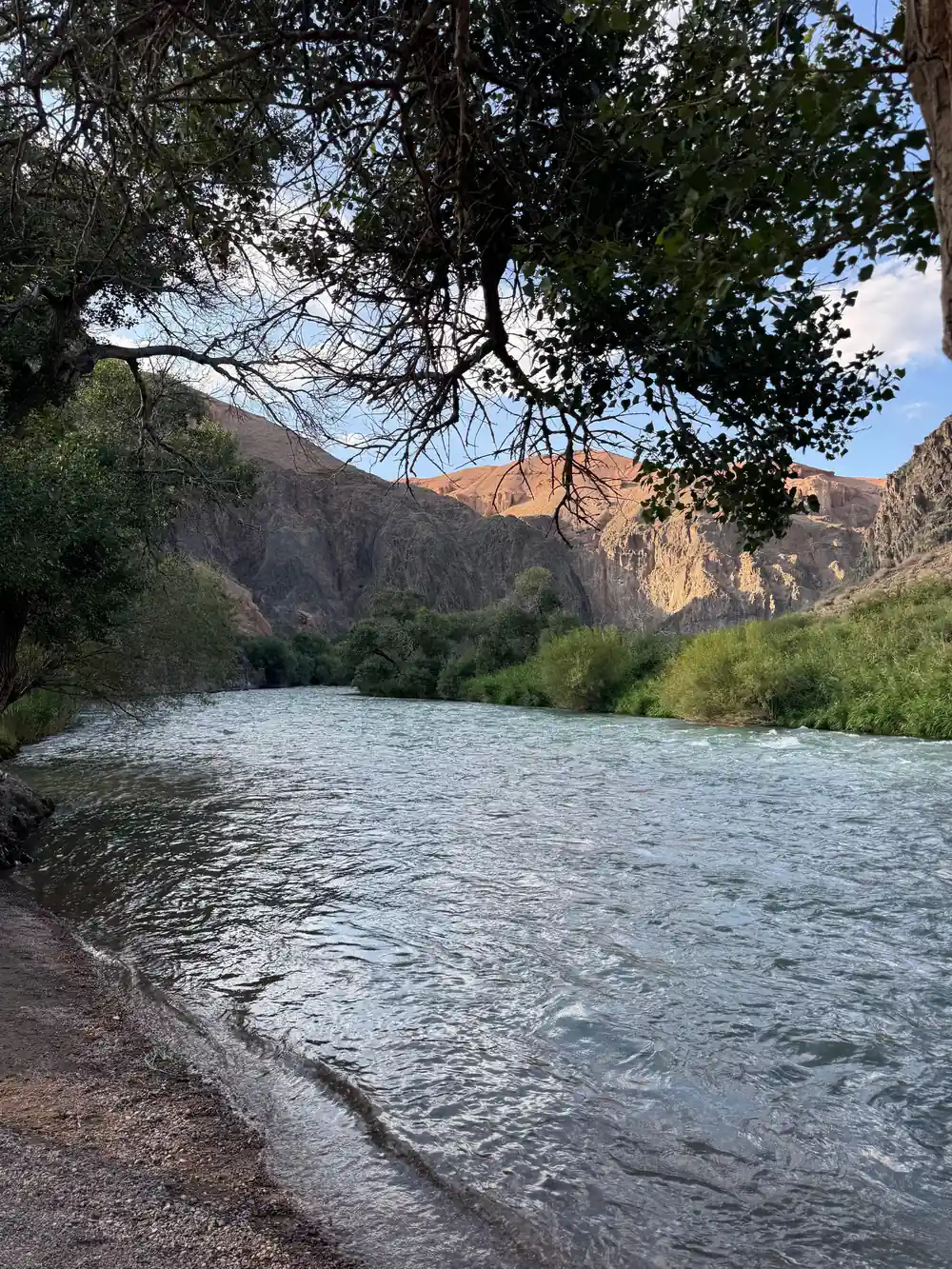
- The Charyn River remains the architect of these formations, its persistent flow having sculpted the Valley of Castles and the canyon's towering walls across geological time.
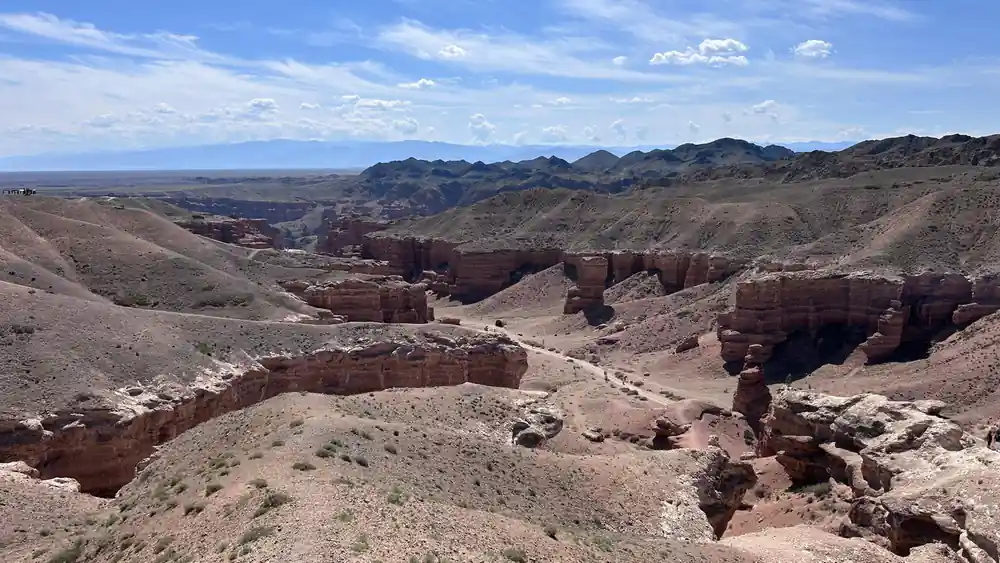
- This gorge stretches as one of Central Asia's most dramatic landscapes, with walls that rise dramatically and extend far enough to reward a full day of exploration and discovery.
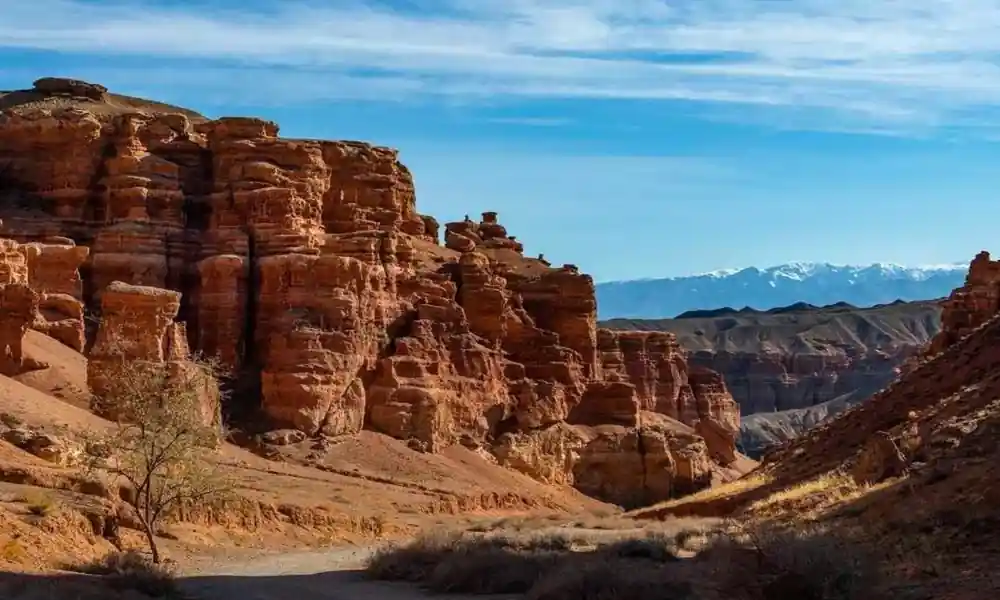
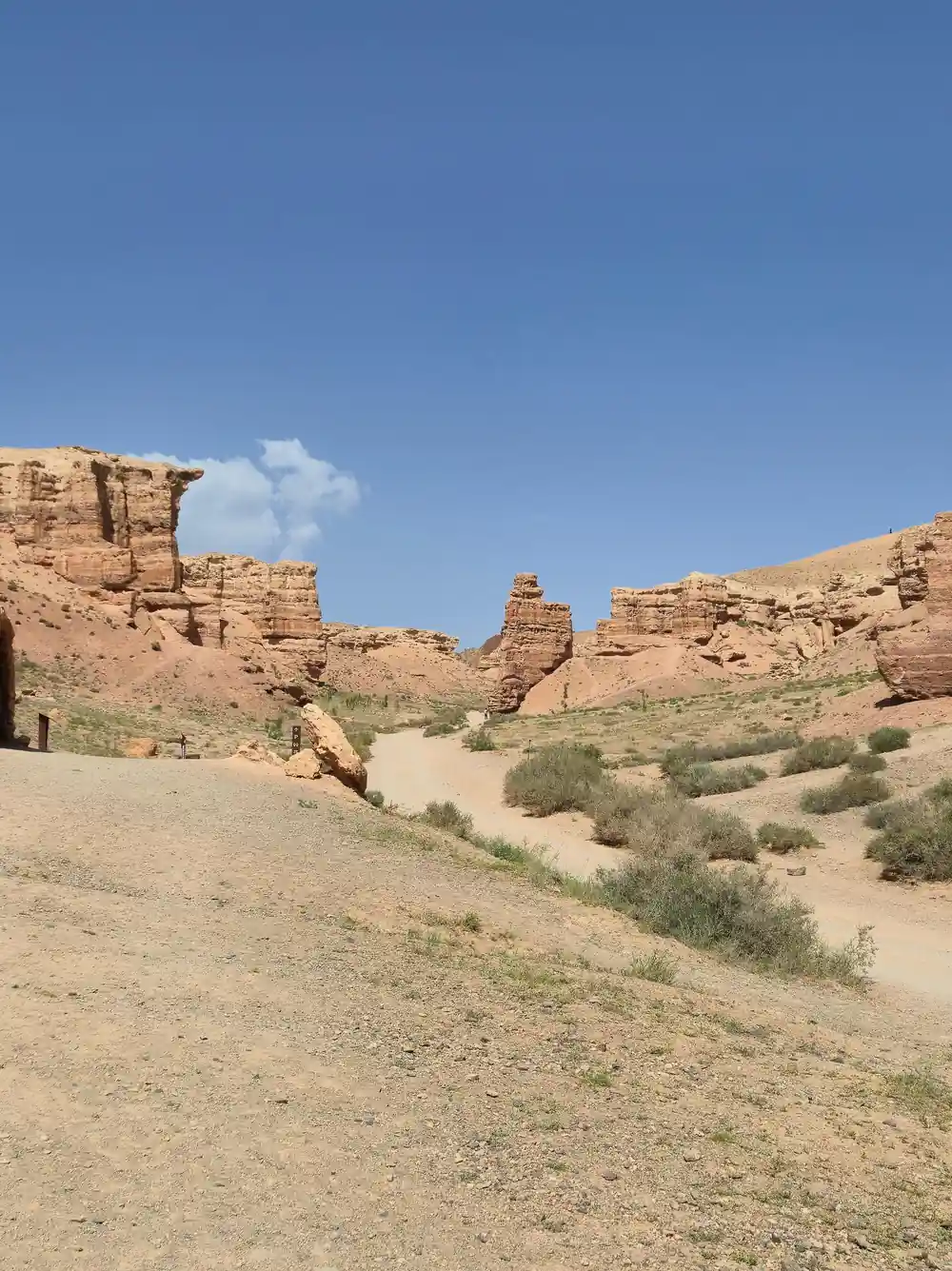
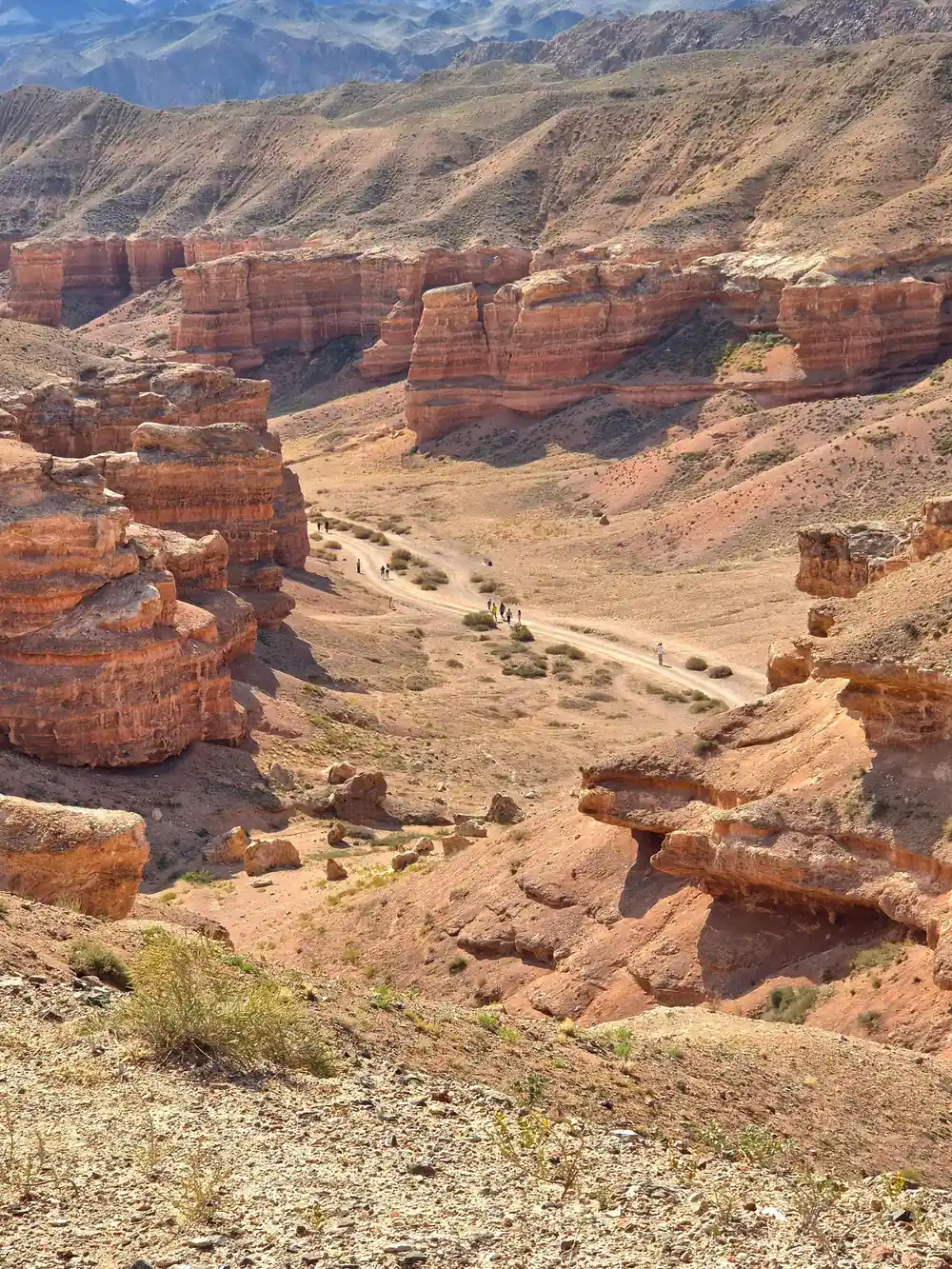
- The canyon walls glow red and orange due to iron oxide in the sandstone layers, a natural pigmentation that intensifies throughout the day and creates the canyon's signature color palette.
- Local legend names it the Valley of Castles for its tower-like rock formations, and a relict ash grove survives here as a living remnant from before the Ice Age.
Twelve Million Years of Water and Stone
The Charyn Canyon story begins in an ancient seabed. During the Miocene epoch, roughly twelve million years ago, this region lay beneath shallow inland seas. Layer upon layer of sediment accumulated: sandstone, siltstone, and clay compressed under the weight of water and time. These deposits built up to hundreds of metres thick, each stratum a record of a different climate, a different coast. When the seas retreated and the land rose, these compressed layers remained, stacked like the pages of a vast geological book.
Today those same layers are visible in the canyon walls, each one telling its story of ancient environments. The sedimentary rocks that form the canyon are the foundation of everything you see on the day trip. Without these deposits laid down in a vanished sea, there would be no canyon, no cliffs, no landscape to explore.
The Charyn River Carves the Canyon
Water is the architect of Charyn Canyon. The Charyn River, fed by snowmelt and seasonal rainfall in the mountains to the south, has spent millions of years cutting through the layered rocks. This is not a violent process but a patient one, grain by grain, year after year. The river's persistent flow, carrying fine sediment and small stones, acts like a saw, gradually deepening its course. Where the rock is softer, the water cuts faster; where it is harder, the canyon widens as wind and frost assist in the work of erosion.
The river still flows through the canyon floor today, and its role has not ended. Seasonal flooding continues the slow sculpture, rounding boulders and carving new details into the rock face. This is the Charyn Canyon story in its most essential form: a river that will not quit, cutting through time and stone alike.
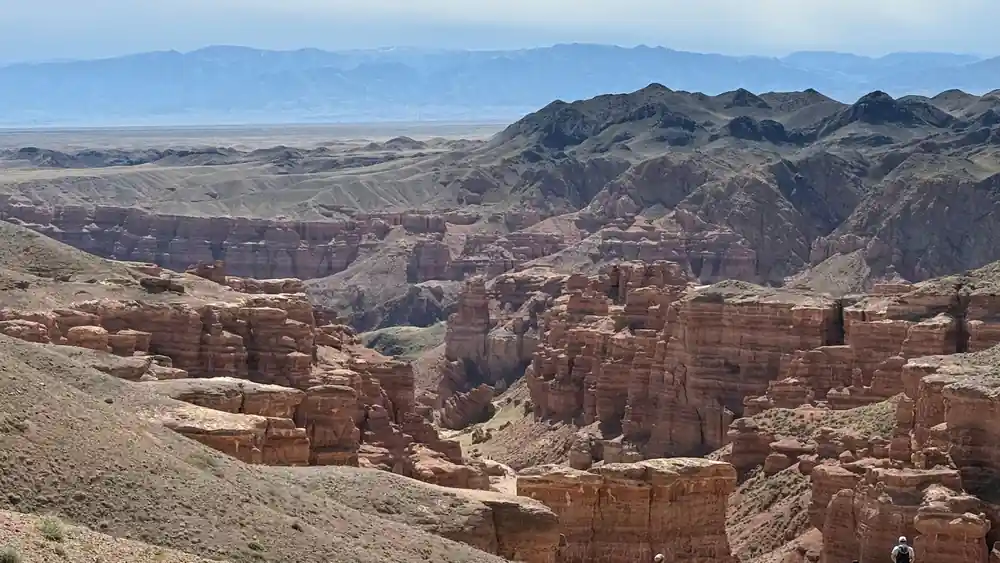
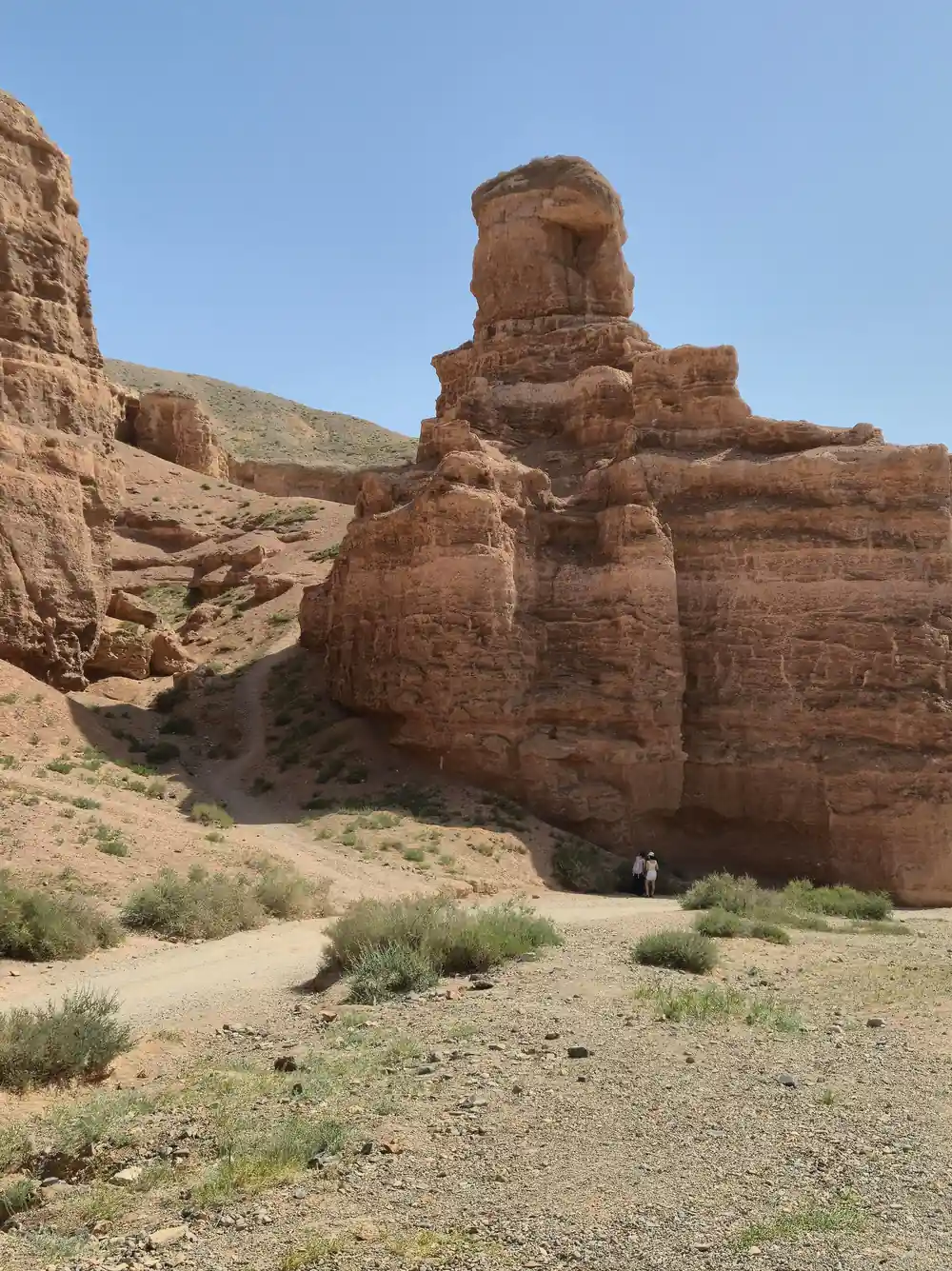
Valley of Castles: twelve million years of erosion carved these towering walls
Iron Oxides Paint the Walls Red and Orange
The striking reds and oranges that dominate the canyon walls owe their colour to iron oxide minerals, particularly hematite and limonite, distributed throughout the sandstone. When iron-rich sediments were laid down in that ancient seabed, they contained iron compounds. Over millions of years, chemical weathering exposed these minerals to air and water, causing them to oxidise. This process is ongoing. The iron in the rock reacts with oxygen, producing the warm rust-like hues that deepen and shift in colour as the day progresses and the angle of sunlight changes.
The intensity of the red varies across the canyon walls depending on the concentration of iron oxides in each layer. Some sections glow almost crimson in late afternoon light, while others appear more ochre or burnt orange. This natural palette is one reason the canyon draws visitors from across Almaty and beyond, offering a landscape that seems almost unreal in its chromatic richness.
The Valley of Castles and Its Nicknamed Formations
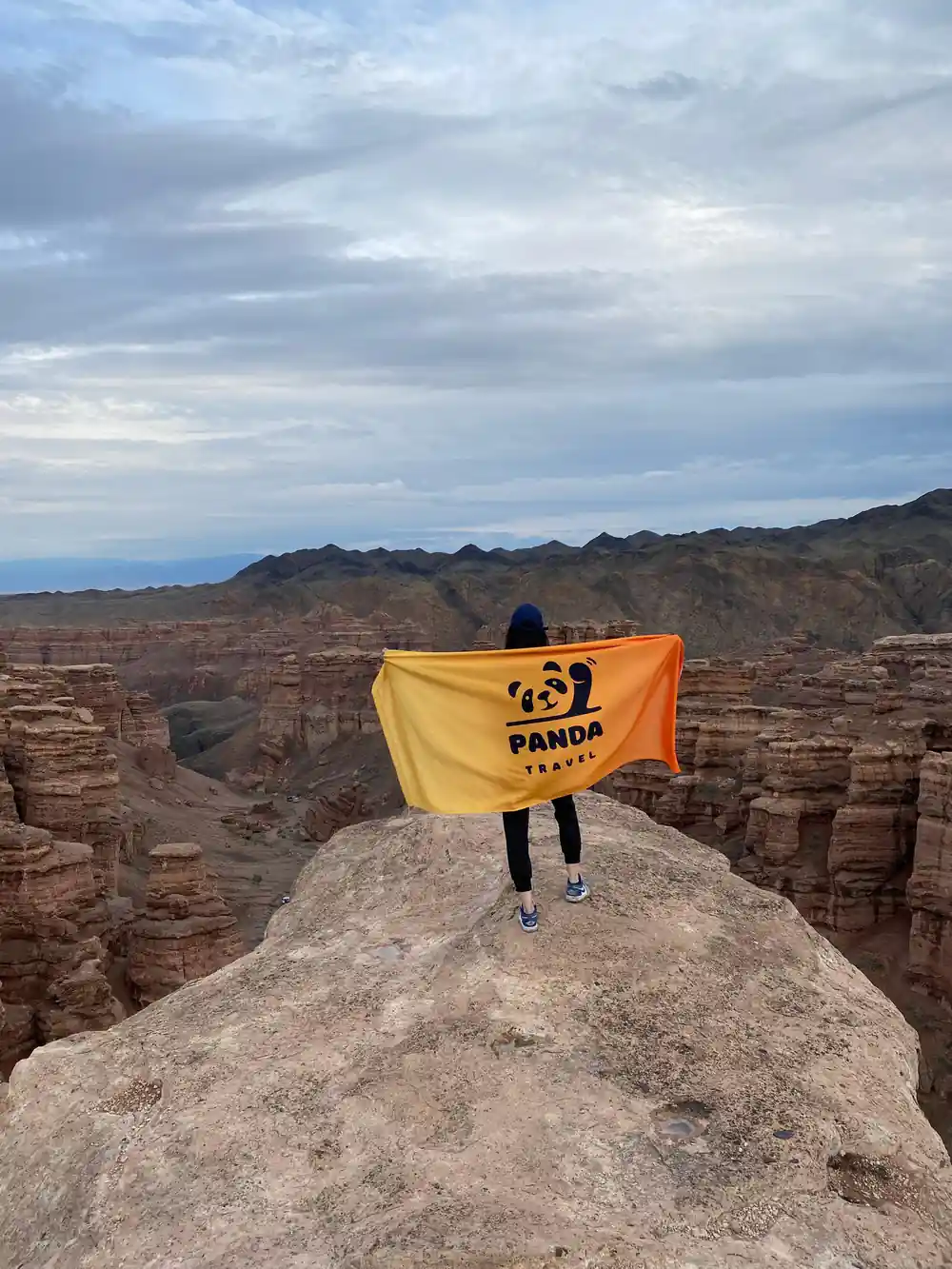
The most celebrated section of the canyon is known as the Valley of Castles, a stretch where the erosion pattern has created towering rock pillars and spires that resemble medieval fortifications. Wind and water have carved the softer layers faster than the harder ones above them, creating overhangs, arches, and pinnacles. Some of these formations have earned their own local names: distinctive shapes that guides point out and that travellers photograph. These nicknames, passed down through years of tourism and local knowledge, mark the landscape with human meaning, turning geological features into landmarks with character.
The formations in the Valley of Castles are not stable forever. Erosion continues, and occasionally rocks fall, altering the skyline slightly. What you see on your day trip is a moment in an ongoing process that began millions of years ago and will continue long after. This is both the appeal and the humbling aspect of visiting such a place: you are witnessing not a finished work but an act still in progress.






Black Canyon and Its Different Character
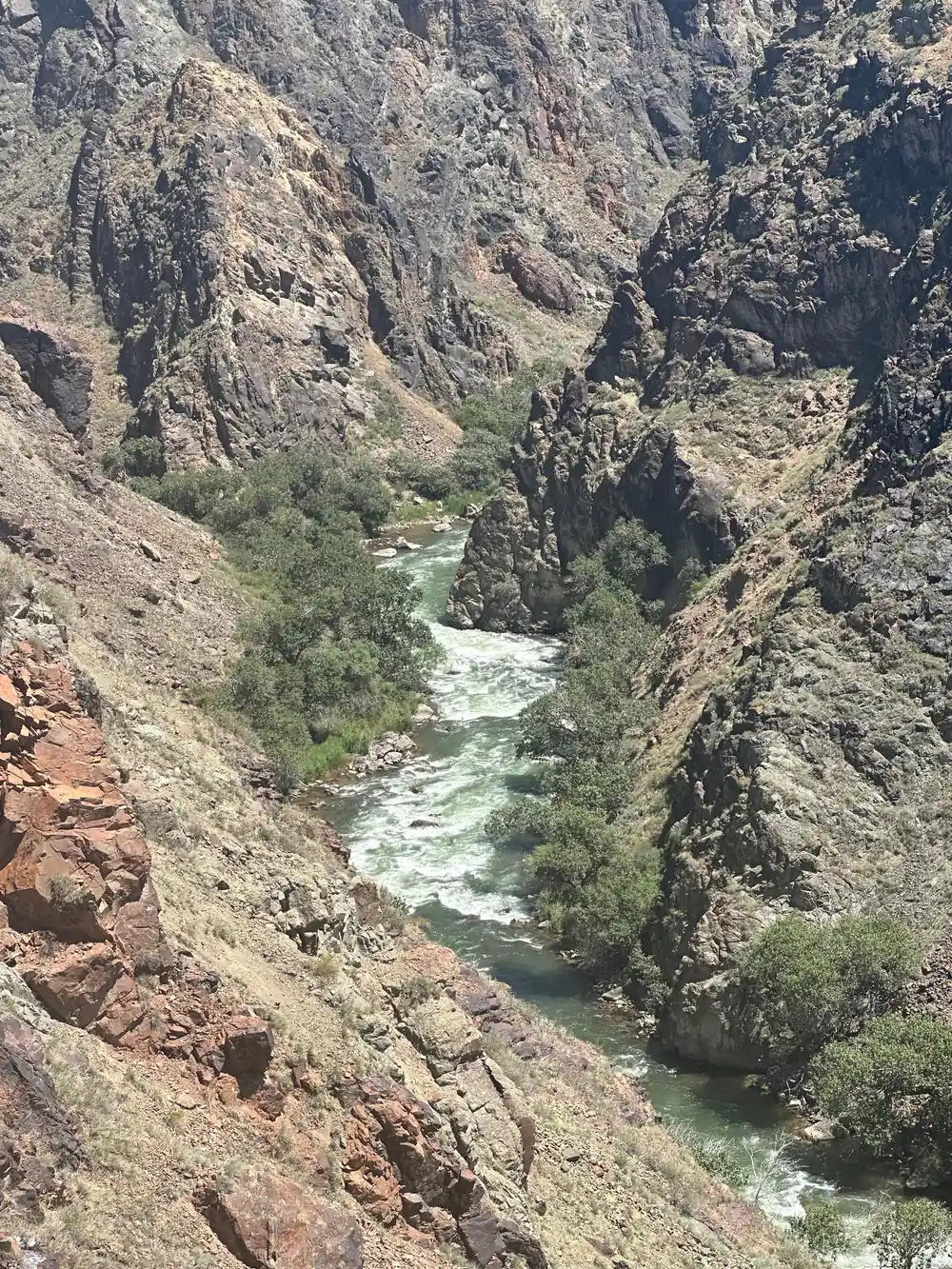
While the Valley of Castles displays reds and oranges, the Black Canyon section presents a darker, more austere appearance. The rocks here contain higher concentrations of darker minerals and different iron compounds, giving them a deep brown to black tint. The lighting in this narrower section is also more shadowed, the walls closer together, creating a different mood entirely. Where the Valley of Castles feels open and sculptural, Black Canyon feels intimate and dramatic. The same twelve-million-year process shaped both, but local variations in rock composition and erosion patterns have given each its distinct character.
The Relict Sogdian Ash Grove Surviving the Ice Age
In a sheltered location within the canyon exists a grove of Sogdian ash trees, a species that dates back thousands of years and represents a living fossil of the Ice Age. When glaciers covered much of Central Asia, this particular species was pushed southward. As the climate warmed and the ice retreated, most populations did not survive the changing conditions. However, the Charyn Canyon, with its unique microclimate, steep walls, and protection from extreme temperature swings, provided a refuge. The Sogdian ash grove survived in this sanctuary and has persisted to the present day, making it a botanical relic of an ancient world.
This grove is one of the most significant ecological features of the canyon. Its presence indicates how the canyon's geography creates conditions unlike the surrounding steppe. The trees survive here because of water from the river, shade from the high walls, and the thermal buffering effect of the canyon itself. Visiting this grove on your day trip offers a glimpse not just of a beautiful landscape but of deep time and evolutionary survival.
Charyn Canyon Facts and Almaty History
Charyn Canyon National Park, established as a protected area in 2004, covers approximately 127,050 hectares. The canyon system extends roughly 154 kilometres, though the most visited and scenic sections are concentrated in a much smaller area easily reached as a day trip from Almaty. The deepest sections of the canyon drop more than 300 metres from rim to river. The Charyn River itself originates in the mountains to the south and flows northward toward the Ili River basin. These Charyn Canyon facts place it among Central Asia's most significant geological formations.
In Almaty history, the canyon was known to local populations for centuries, but it gained international attention only in recent decades. The creation of the national park brought infrastructure, guides, and formal tourism to what had been a remote area. Today, the day trip from Almaty to Charyn Canyon, combined with the nearby Kaindy and Kolsai Lakes, is one of the region's most popular excursions. The landscape that took twelve million years to create is now accessible within a single day's journey from the city, allowing visitors to move from urban streets to geological deep time in just a few hours of travel.
Walk through twelve million years of stone
from US$59Reserve now & pay later
| Charyn Canyon | Grand Canyon, USA | Black Canyon | |
|---|---|---|---|
| Length | 150 km | 446 km | 25 km |
| Wall height | Up to 300m | Up to 1,600m | Up to 250m |
| Rock type | Sandstone | Granite and schist | Granite and dolerite |
| Dominant colour | Red and orange | Red and brown | Dark grey to black |
| Access | Day trip from Almaty | Multi-day hiking or helicopter | Day trip from Almaty |