Quick summary
- Walk among Sogdian ash trees, a relict species surviving in Charyn Canyon since the Tertiary period, now found nowhere else on Earth.
- Watch golden eagles and other raptors circle above the red rock cliffs, hunting across the canyon thermals throughout your visit.
- Explore dense Schrenk's spruce forests framing Kaindy Lake, their towering trunks reflected in the emerald water year-round.
- Spot trout moving beneath the surface of Kolsai Lake's pristine alpine waters, a sign of the ecosystem's mountain stream heritage.
- Time your visit for spring steppe tulips and summer meadow blooms, when Charyn Canyon and lakeside meadows burst with colour.
The Relic Ash Grove: A Survivor from the Silk Road
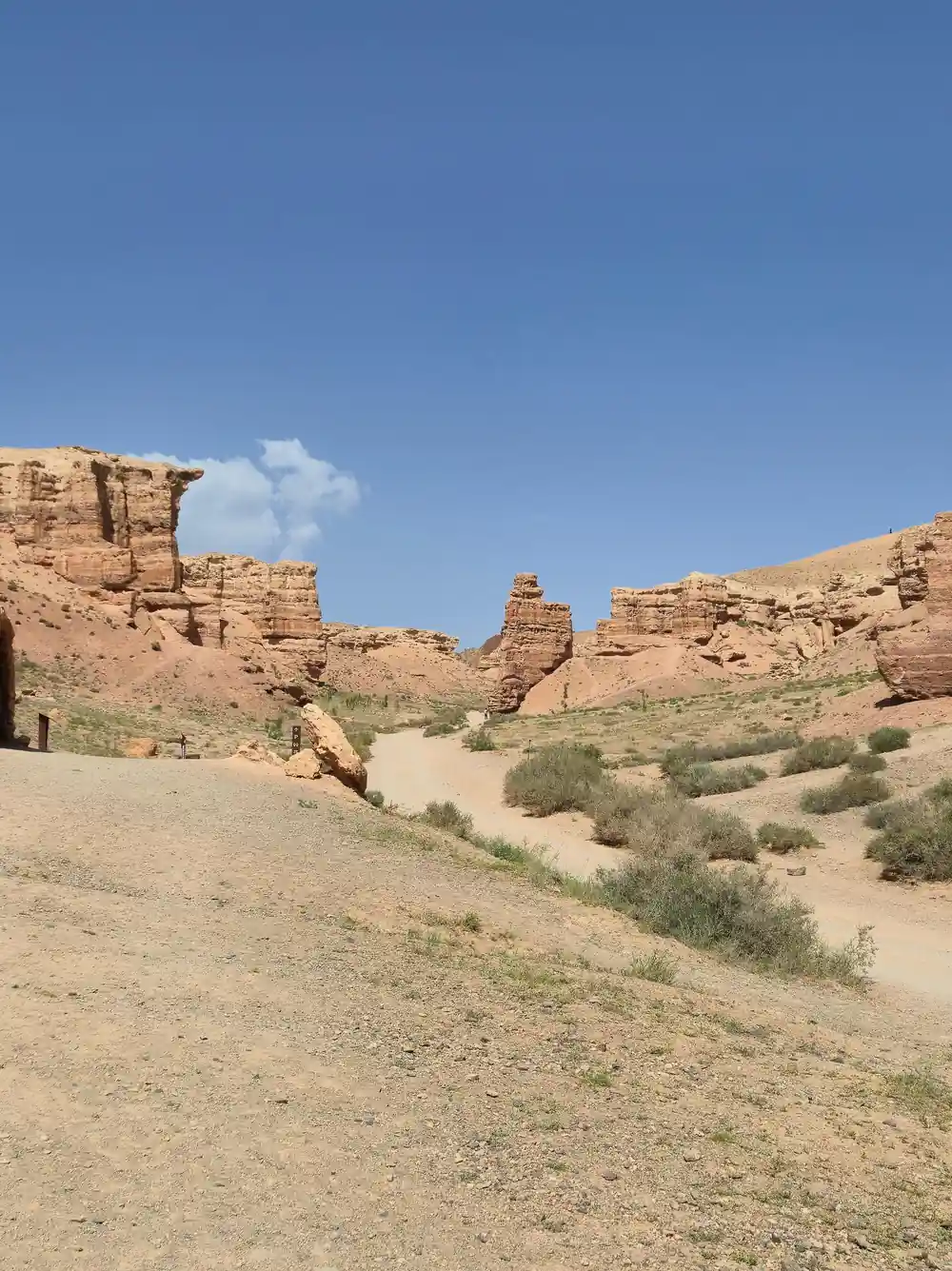
Charyn Canyon harbors one of Central Asia's most botanically significant ecosystems: a relic Sogdian ash grove that has persisted for thousands of years in this remote landscape. These ash trees represent a living link to the ancient climate and vegetation of the Silk Road era, when wetter conditions allowed such forests to flourish across what is now semi-arid steppe. The grove occupies a narrow riparian zone along the canyon floor, where underground water sources sustain species that disappeared from surrounding regions millennia ago.
On your day trip, you'll walk through sections of this ancient forest where massive ash trunks create a canopy rare in Kazakhstan. The trees here grow slower than their lowland cousins and reach considerable ages, their rings encoding centuries of regional climate history. The understory shelters relict shrubs and herbaceous plants equally adapted to this protected microclimate. This 17-hour excursion gives you time to observe how the canyon's walls create the precise temperature and moisture conditions that allow these Silk Road survivors to endure.
Birds of Prey Hunting Above the Red Cliffs
Charyn Canyon's towering red rock formations create ideal thermal corridors for raptors hunting across the Tien Shan foothills. Golden eagles regularly circle the upper canyon reaches, their 2.2-meter wingspans riding thermals that rise from sun-heated stone. Steppe eagles and lesser spotted eagles follow similar routes during spring and autumn migration periods. Peregrine falcons nest in cliff faces and dive through the canyon on hunts, reaching speeds over 300 kilometers per hour as they pursue rock doves and sandgrouse.
Your guide will point out hunting patterns and perch sites as you move through the canyon floor and along observation points. Lammergeiers, the enormous bearded vultures with 2.8-meter wingspans, occasionally range this far south from higher Tien Shan valleys, though sightings remain infrequent. The canyon's depth and aspect mean you'll have extended views upward as birds work the thermals throughout your visit. Early morning hours, included in your full 17-hour itinerary, offer the best raptor activity as these predators begin their daily hunts.
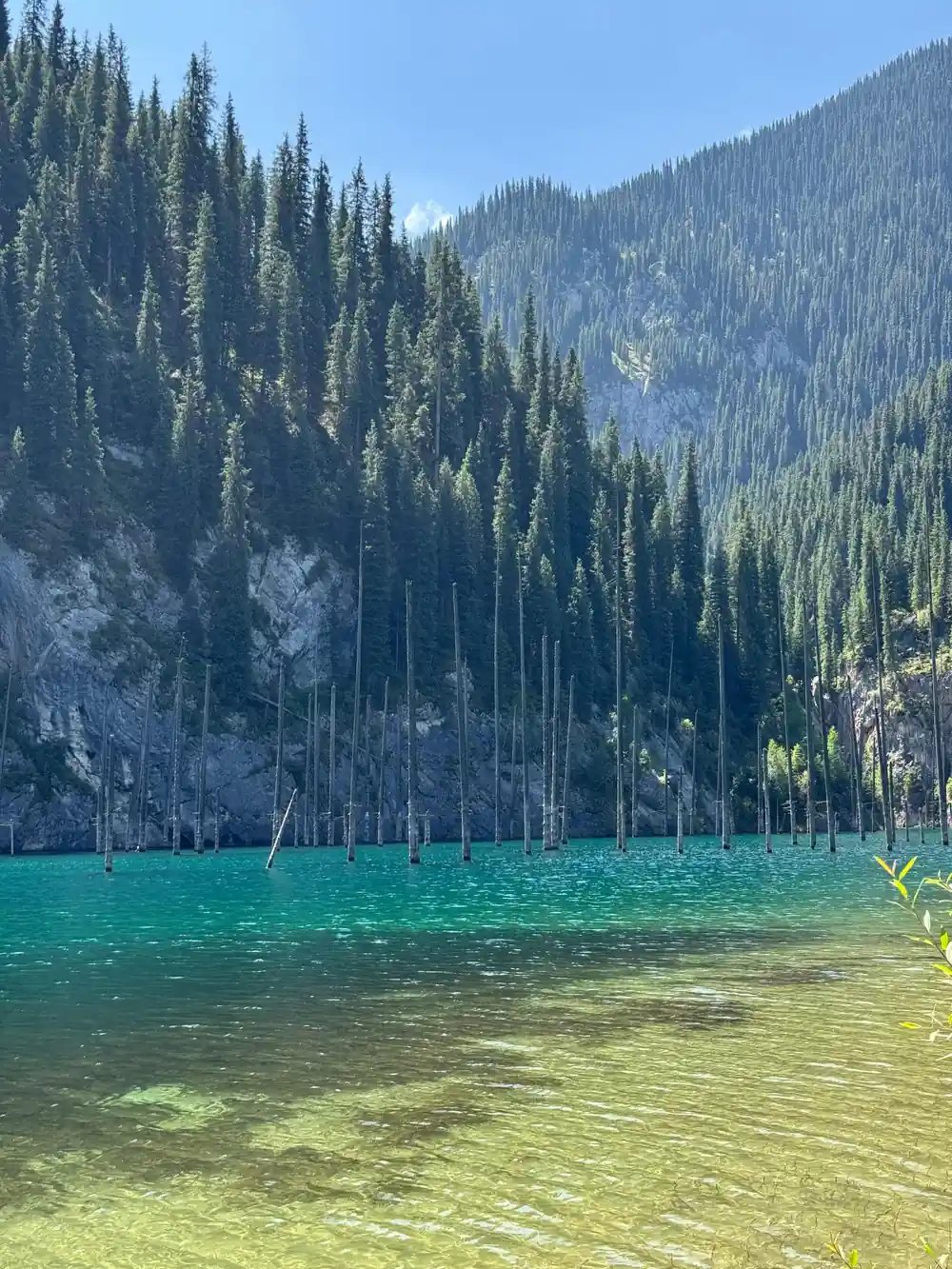
Juniper scrub yields to spruce forest at the canyon's edge
Ibex and Argali: What You Realistically Encounter
The Charyn Canyon region supports populations of Siberian ibex and argali sheep, yet encountering these animals requires specific conditions and considerable luck. Ibex prefer the steepest cliff faces and highest elevations within the park, where they move with remarkable agility across terrain that appears vertical to human eyes. Argali, the world's largest wild sheep, occupy higher alpine meadows of the surrounding Tien Shan peaks rather than the canyon bottom itself. Both species are most active during early dawn and late afternoon, periods when they descend to feed and drink.
During a day trip covering three distinct locations, genuine sightings remain uncommon rather than routine. Your professional guide will explain the habitat preferences and seasonal movement patterns that determine where these animals spend their time, and will scan appropriate slopes with binoculars. If conditions align and animals are present in visible locations, the experience becomes a genuine highlight. Many visitors find the evidence of their presence - tracks, droppings, disturbed scree - equally interesting, as these signs reveal how ibex navigate terrain and how argali herds migrate through the canyon system.
The Drowned Spruce Forest at Kaindy Lake
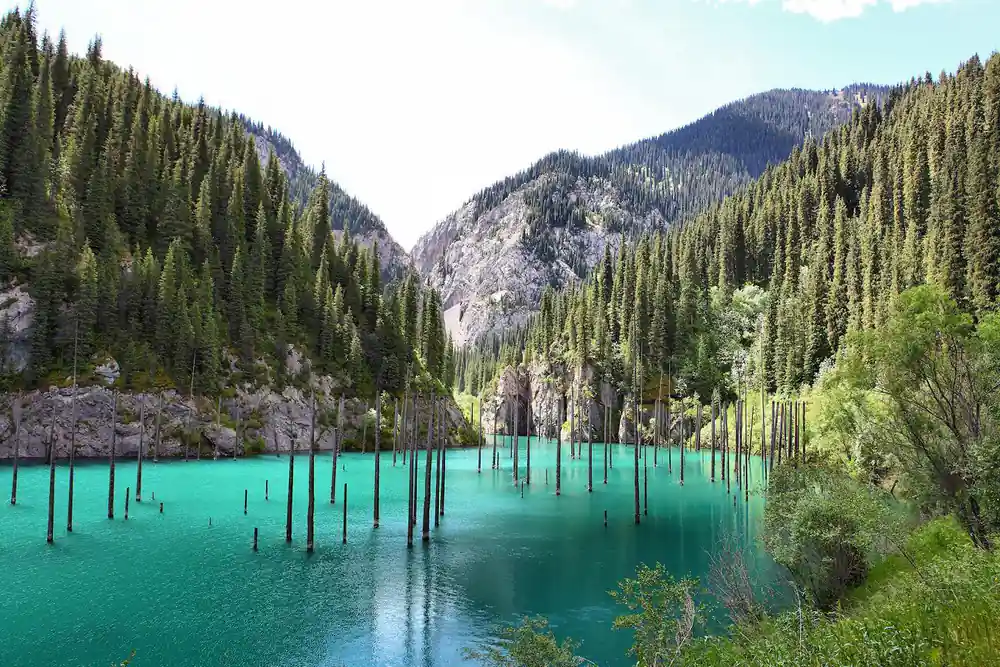
Kaindy Lake presents one of the Tien Shan's most surreal landscapes: a forest of spruce trees that died standing after a 1911 landslide dammed the valley and flooded the woodland. The trees, predominantly Tien Shan spruce (Picea schrenkiana), remain rooted in the lake bed with their silvered trunks rising above the waterline like a forest of monuments. Today, nearly 115 years later, these dead trees create an otherworldly atmosphere that transforms Kaindy into a landscape more resembling a submerged graveyard than a typical alpine lake.
The living spruce forest surrounding Kaindy's shoreline forms a dense, dark green boundary that contrasts sharply with the grey ghost forest in the water. These healthy trees, at elevations around 2,200 meters, experience the cold winters and brief summers typical of high Tien Shan zones, which slow their growth compared to lowland spruces. Some of the standing dead trees in the lake are now strong enough to support hikers who walk carefully across the submerged forest floor. Your trip to Kaindy includes transfer to the lake parking area and time to explore this unique ecosystem.
3
The Sogdian ash grove here has survived 3 million years, a living relic from an ancient climate.
Trout Populations in Kolsai and Kaindy Waters
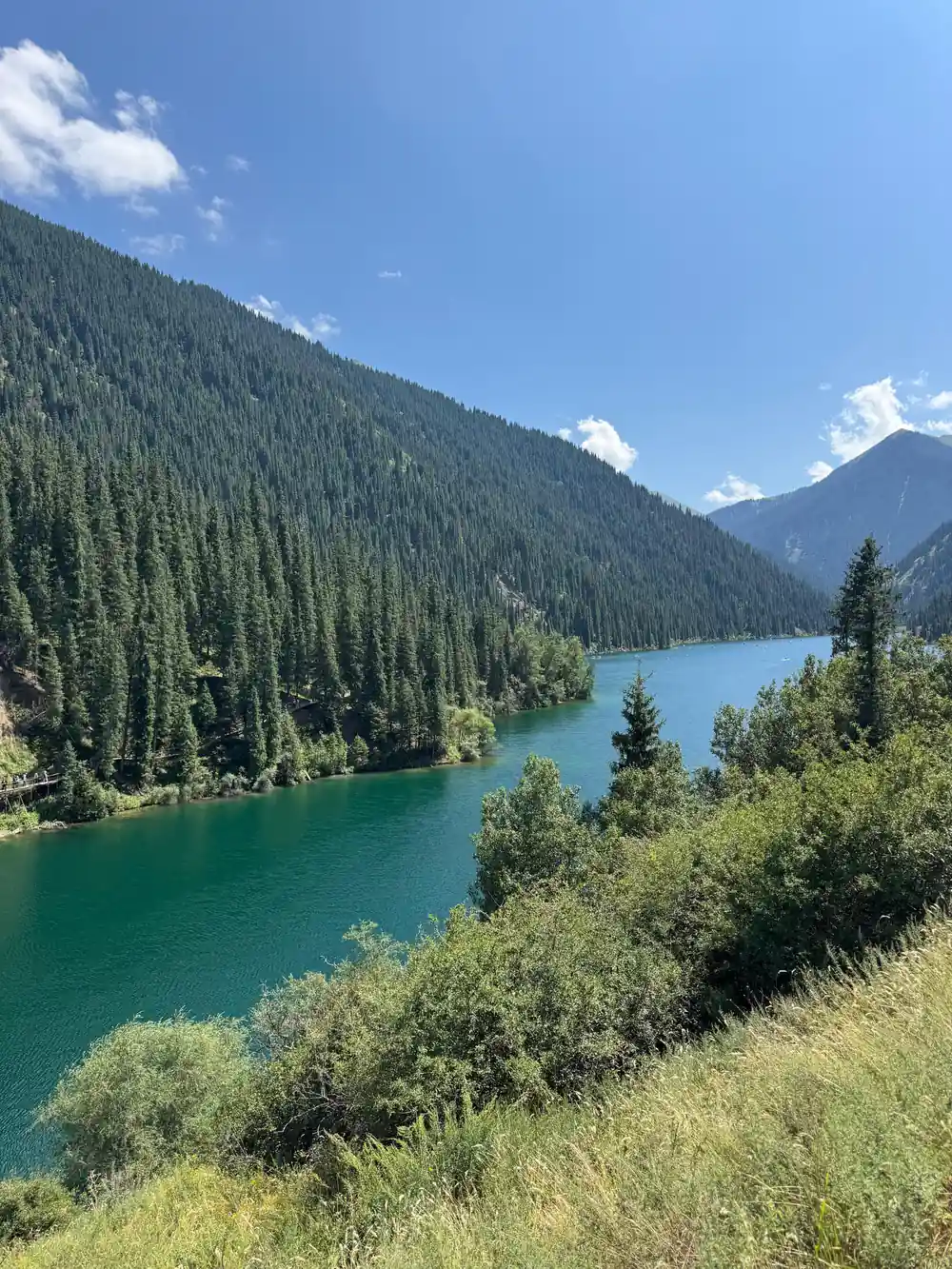
Both Kolsai Lake and Kaindy Lake harbor populations of trout that have adapted to these high-altitude environments. Kolsai, the largest of the three lakes at elevations spanning about 1,800 to 2,700 metres across its three basin levels, contains species including Tien Shan dace and alpine trout that thrive in cold, oxygenated waters. Kaindy's trout populations similarly depend on the spring-fed currents and cool temperatures maintained throughout the year by the lake's mountain setting and the shade cast by its surrounding spruce forest and drowned trees.
These fish populations remain relatively small compared to lowland lakes, limited by the short growing season and cold water temperatures of the high Tien Shan. The trout here are not stocked for tourism but represent natural populations that have persisted in these lakes for centuries. Local communities and conservation efforts work to maintain these fish stocks as part of the broader ecosystem health. During your 17-hour day trip, you'll see the clear water that makes these trout populations visible near the surfaces of both lakes, particularly in the early morning hours when fishing pressure remains minimal.
Reptiles, Insects, and Seasonal Wildlife Patterns
The Charyn Canyon region's reptile population remains modest compared to lower elevations, but specific species have adapted to this environment. Central Asian pit vipers inhabit the warmer lower canyon sections, while grass snakes prefer damper areas near water sources. Rock lizards (Phrynocephalus species) dominate the exposed red stone surfaces of the canyon walls, where they dart between sun-basking and shade-seeking. Scorpions, though present in Kazakhstan's steppe regions, are not characteristic of the canyon's higher, cooler microhabitats and represent minimal concern during your visit to the three main sites.
Insect life explodes during warmer months, with alpine butterflies, ground beetles, and high-elevation wasps becoming increasingly visible from June onward. The spring and early summer months bring emergence of insects from the previous season's pupae, creating food sources that support the canyon's bird and small mammal populations. Late summer and autumn see reduced insect activity as temperatures drop and the brief alpine growing season winds down. Your guide will point out these seasonal indicators and explain how wildlife populations fluctuate throughout the year based on water availability, plant phenology, and temperature cycles.
Wildflowers and Tulips: Timing Your Visit for Peak Bloom
The steppe surrounding Charyn Canyon and the alpine meadows around Kolsai and Kaindy lakes transform dramatically during the spring wildflower season, which peaks from late April through May at lower elevations and extends into June at higher altitudes. Wild tulips (Tulipa species), including the distinctive red Greig's tulip native to the Tien Shan region, bloom across open slopes alongside purple crocuses, yellow adonis flowers, and white anemones. The compressed growing season means this floral display concentrates into a relatively narrow window, creating hillsides of color that last only 3 to 4 weeks.
Alpine zones around Kaindy Lake experience peak wildflower displays approximately 2 to 3 weeks later than the canyon floor, as snow melt releases the soil from winter's freeze progressively upward with elevation. Early June offers the best chance to see both canyon wildflowers and high-altitude alpine flora on a single trip. By mid-July, most spring bloomers have faded, though some summer-flowering species begin emerging. Timing your 17-hour day trip during late April through early June maximizes the likelihood of seeing significant wildflower displays across all three locations on your itinerary.
A guide reveals what you'd otherwise miss
from US$59Reserve now & pay later